It’s a high-tariff game that Todd Boehly, Behdad Eghbali and the rest of the £40bn-fortuned BlueCo consortium that bought Chelsea in 2022 are playing with their investment in Premier League football.
At this point, we probably don’t need to give you a refresher on the money that has been pumped into Chelsea since that date. Suffice to say, it’s the kind of cash that most of us can’t even conceptualise.
They are playing the long game, of course, but it’s hard to see how exactly they expect to generate a return. That’s the view among even the biggest brains in football finance.
Unlike Roman Abramovich, they are in it for a financial return, not an emotional one. It’s not an expensive hobby or a vanity project. BlueCo are backed by private equity and have investors to satisfy.

And as well as the billions they have plunged into Chelsea’s recruitment and retention budget, a further £1.75bn has been committed, which is likely for the redevelopment of Stamford Bridge or a new stadium.
Broadly speaking, there are three ways owners can make money from a football club:
- Charge interest on loans to to the club
- Take dividends from profits that the club makes
- Sell the club for more than you bought it for
It would take far too long for Clearlake and Todd Boehly’s faction to make a return on the money they have already fronted via the loans option, so that’s a non-starter.
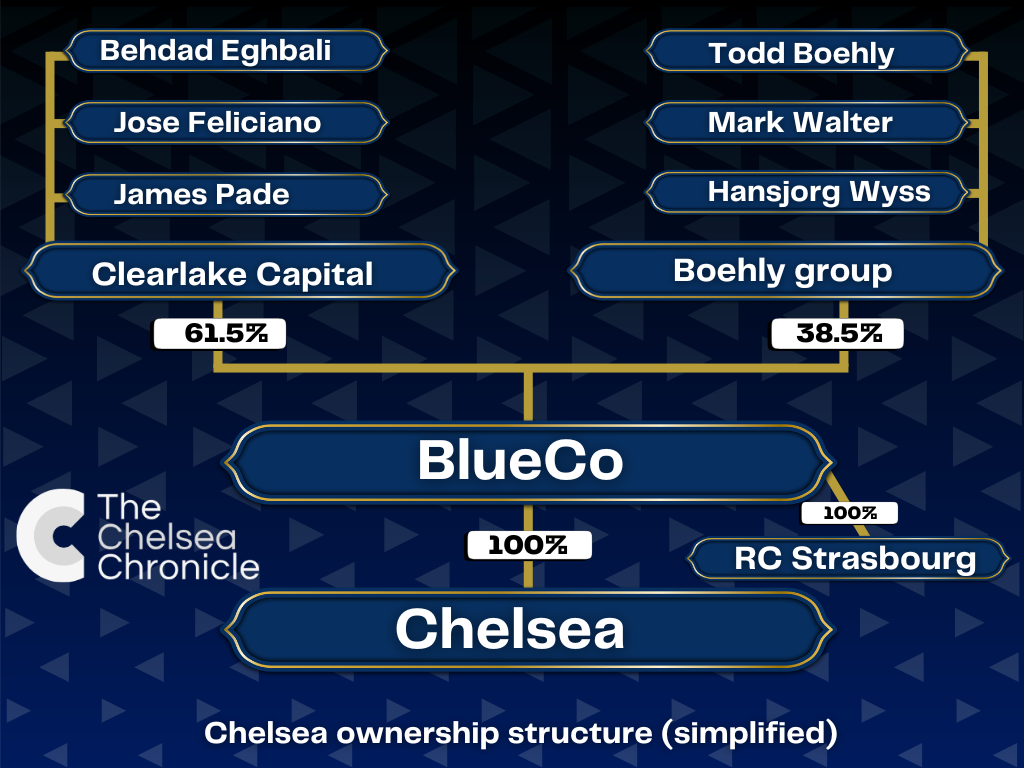
When it comes to options two and three, they are one and the same. You’re unlikely to sell Chelsea for more than £2.5bn unless you can demonstrate that is can be profitable in the long term.
Chelsea are a long, long way away from turning a profit, despite what the club’s accountants would have you believe. The headline figures for 2023-24 showed a £130m profit, but the underlying numbers paint a very different story.
The sale of the women’s team, Stamford Bridge and hotels and a car park generated artificial profits but no money actually changed hands in those transactions. It’s not actual cash that the owners could touch.
Those deals were, of course, a PSR dodge.
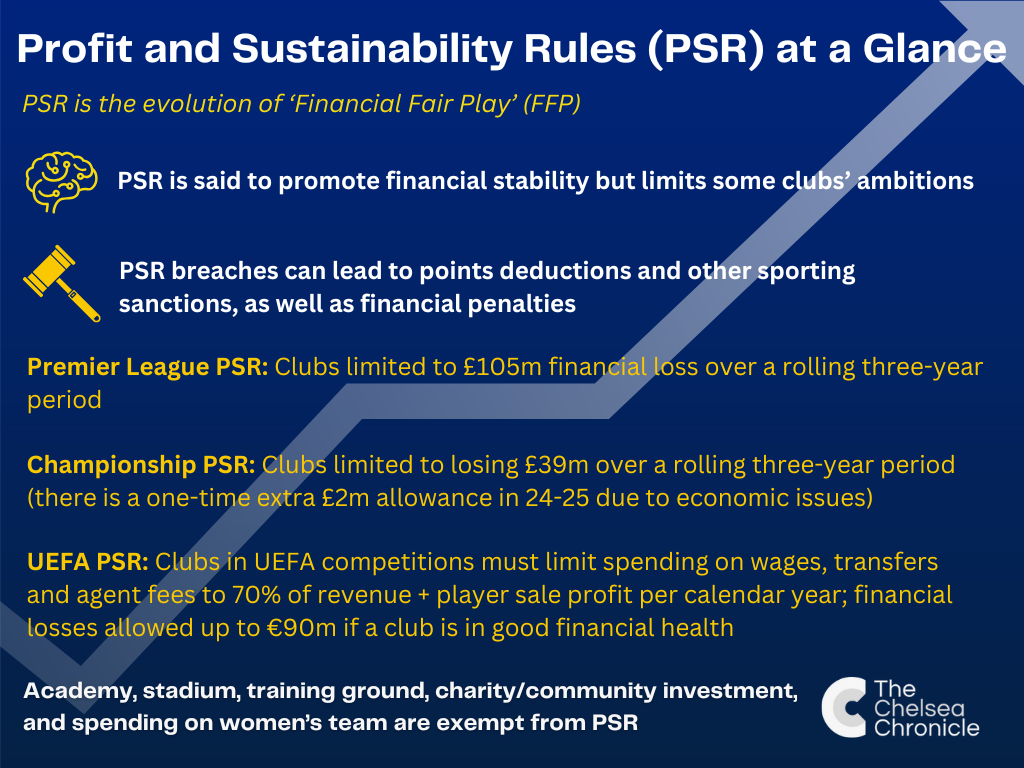
PSR, or Profit and Sustainability Rules, could, in theory be a positive thing for Chelsea’s owners once they get their house in order.
In theory, tighter spending controls would limit the amount they have to spend to compete in the Premier League, which could in turn lead to regular profits and a sustainable approach. Hence the name.
But Sunday’s draw with Ipswich Town and umpteen other results this season prove that Enzo Maresca’s side have a lot of work to do – and, probably, a lot more money to spend – before they get there.
| Position | Team | Played MP | Won W | Drawn D | Lost L | For GF | Against GA | Diff GD | Points Pts |
| 3 |  Nottm ForestNottingham Forest Nottm ForestNottingham Forest | 32 | 17 | 6 | 9 | 51 | 38 | 13 | 57 |
| 4 |  NewcastleNewcastle NewcastleNewcastle | 31 | 17 | 5 | 9 | 56 | 40 | 16 | 56 |
| 5 |  Man CityManchester City Man CityManchester City | 32 | 16 | 7 | 9 | 62 | 42 | 20 | 55 |
| 6 |  ChelseaChelsea ChelseaChelsea | 32 | 15 | 9 | 8 | 56 | 39 | 17 | 54 |
| 7 |  Aston VillaAston Villa Aston VillaAston Villa | 32 | 15 | 9 | 8 | 49 | 46 | 3 | 54 |
| 8 |  B’mouthBournemouth B’mouthBournemouth | 32 | 13 | 9 | 10 | 52 | 40 | 12 | 48 |
And with PSR already an issue at home and in Europe, Chelsea have some recalibrating to do before the owners can get the spending rules to work in their favour.
Significantly, Boehly, and Eghbali and company don’t know what kind of system they are going to be operating under going forward.
Chelsea could be hit with £550m PSR cap
UEFA and the Premier League have distinct PSR systems.
As things stand, Chelsea have satisfied the Premier League’s PSR criteria for 2023-24. But the women’s team sale is being assessed for fair market value and could yet change all of that.

UEFA, by contrast, have rejected the women’s team sale for PSR purposes, which means Chelsea have failed the European governing body’s compliance tests.
The Blues are currently in talks with UEFA about a potential settlement, which is more likely to be financial than sporting i.e., the club can expect a fine rather than a points deduction or transfer ban.
One element of UEFA’s regulations – which are more complex than the Premier League’s current system – is what is known as the ‘squad cost control’ rule.
Clubs competing in European competitions are allowed to spend no more than 70 per cent of annual revenue plus player sale profits on wages, transfers and agents’ fees.
The Premier League are looking to introduce a similar rule, which will likely take effect from 2026-27 once the fallout from Manchester City’s legal battle with the Premier League has – hopefully – fizzled.
Another mechanism the English top flight want to pursue is ‘anchoring’, which would limit spending to a multiple of what the bottom-placed club earns in media income.
As relayed by football finance expert Chris Weatherspoon, this season’s bottom-placed club, Southampton, are set to earn approximately £110m this season.
It is believed that the Premier League want to introduce a 5x multiple, which would therefore limit spending to £550m.
Chelsea’s accounts for 2023-24 show spending of £530m on wages and amortisation, which is how clubs account for transfers over a period of time.
That gives them very little breathing space. They are by far the closest club to that 5x cap.
- READ MORE: Why Chelsea co-owner Todd Boehly has just been spotted meeting Donald Trump amid £775m masterplan
Todd Boehly and Behdad Eghbali up against finance issue at Strasbourg
Elsewhere in the BlueCo ecosystem, a deadline is fast approaching for Todd Boehly and Behdad Eghbali in France’s Ligue 1.
Strasbourg fans are protesting BlueCo’s ownership of the club. What’s more, this week, an issue surrounding Strasbourg’s biggest single revenue stream has reared its head.
Ligue 1 are in dispute with broadcaster DAZN about alleged breaches of contract.
DAZN have withheld payments to Ligue 1, who they accuse of not doing enough to combat piracy of the league. The company is now seeking almost £500m from Ligue 1.
A mediator hired by DAZN and Ligue 1 to thrash out a deal had set a deadline for today, but it looks unlikely that there will be a resolution in that time.
That means BlueCo-owned Strasbourg are in limbo.
Receive a digest of our best Chelsea content each week direct to your mailbox