Todd Boehly and Behdad Eghbali aren’t in the habit of losing money but it will be a long, long time before they are in profit on their world-record takeover of Chelsea – if ever.
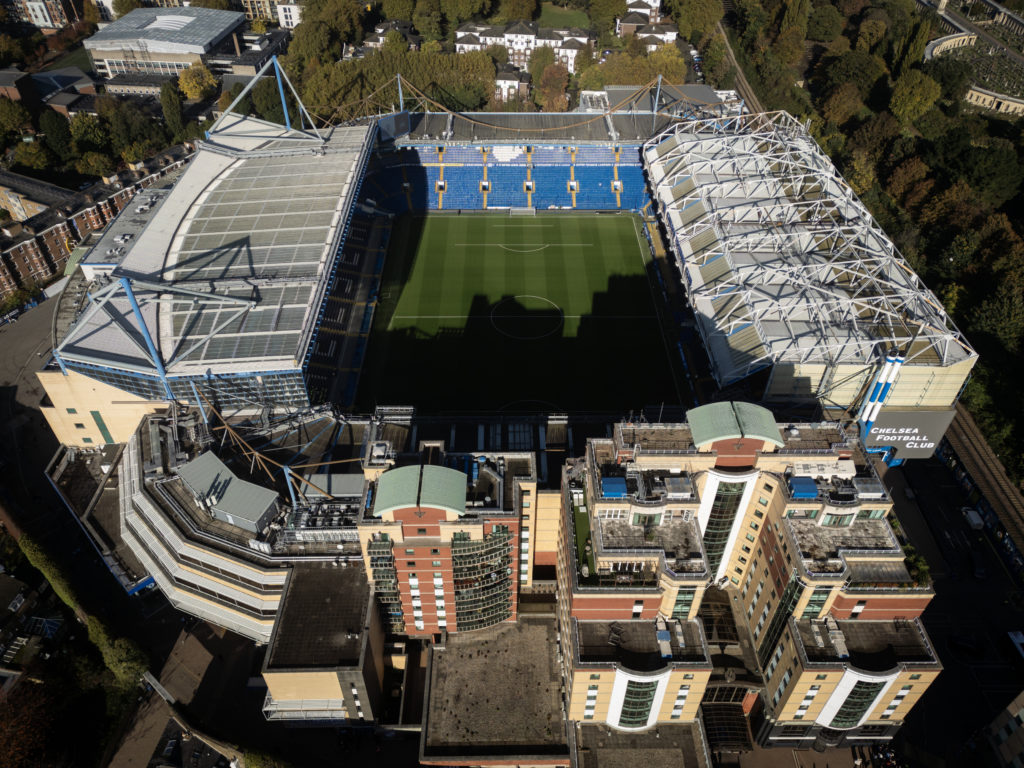
For their masterplan in West London to make financial sense, they need to make much more money out of their number-one asset: Stamford Bridge. Chelsea’s home since the club was founded in 1905, the 40,173-seater stadium is rapidly falling behind its peer group in the revenue generation stakes.
In the last financial year, the Blues generated £80m in matchday income. That was the smallest of any of the so-called Big Six clubs besides Manchester City, and they will overtake Chelsea next season once their expansion to beyond the 60,000 mark is complete.
Meanwhile, Newcastle United, Aston Villa, Leeds United, Birmingham City are all planning either ambitious expansions or a move to a new stadium entirely and will be narrowing the gap soon too. Little wonder, then, that Chelsea’s owners are exploring what is possible on the existing site in SW6 and beyond.
It appears, however, that Todd Boehly and Behdad Eghbali – the two most influential men at the club – are at odds with each other over the future of the stadium. Eghbali and his Clearlake Capital deputies want to remain at an expanded Stamford Bridge, with a capacity of around 55,000 mooted. Boehly on the other hand favours a move to a new postcode and a capacity of around 60,000.
Both avenues will be hugely complex. At Stamford Bridge, the club is architecturally limited, though the club has acquired a plot of land next to the stadium at Stoll Mansions for around £80m which is said to be crucial to the would-be blueprints.
On a new site, Chelsea would have more freedom. However, the Earl’s Court plot would likely cost the club around £500m before they can even break ground on a stadium construction project likely to cost £1-2bn.
Boehly himself has played down talk of a rift between him and Eghbali, though the chairman has tacitly admitted that their differences could dictate the future ownership of the club, with both men reportedly open to buying the other out to see their vision for the stadium become a reality.
In any case, there have been fresh developments this week which provide a hint about which direction Chelsea are thinking of going.
- READ MORE: Estevao Willian unhappy with coach ahead of Chelsea Club World Cup showdown, ‘he didn’t like it’
Chelsea could be Premier League’s biggest matchday income generators at Earl’s Court stadium
As revealed by The Telegraph, Chelsea representatives have met with the office of London Mayor Sadiq Khan about the potential to build a new stadium at Earl’s Court, a 10-minute drive from the Bridge.
Reportedly, while the developer that owns the site is set to start work on a £10bn mixed-use complex at an unspecified date in 2026, Chelsea could still place a bid if the owners do decide to go with Earl’s Court.
The proposed stadium is said to be around 60,000 in capacity.
In volume terms, that would make the stadium the 7th or 8th biggest in the Premier League. However, in terms of matchday income, it’s likely that it would be the most lucrative of the current crop.
A pro-rata calculation based on Chelsea’s matchday income in 2023-24 would suggest that an increase in capacity of around 20,000 would see the club earn around £120m annually through the turnstiles.

In reality, however, a shiny new stadium would see Chelsea surpass Man United, Arsenal, Spurs and Liverpool as the division’s biggest matchday income generators.
Stamford Bridge has the largest share of hospitality and premium seats of any club in the Premier League. At a world-class new venue, they would extract even more cash from this domain.
Experts consulted by this site hypothesise that Chelsea would be looking to double their matchday income at a new venue, which based on last season’s figures would give them stadium revenue of £140m. That would be the biggest in the Premier League – and remember, Chelsea weren’t in the Champions League in 2023-24, so next season’s figures will give a more reliable and more lucrative analysis.
For a club whose early years under Boehly and Eghbali have been characterised by a delicate dance to avoid falling foul of Profit and Sustainability Rules (PSR), that would be transformative. An extra £80m or so in revenue per season alongside a maturing commercial strategy and better cost control could eventually see the club run at a consistent profit, which is the ownership’s ultimate aim.
- READ MORE: The two signings Enzo Maresca personally wants at Chelsea after Joao Pedro and Jamie Gittens
Will fans ‘turn a blind eye’ to Todd Boehly’s ticket resale site?
One of the more controversial methods of increasing matchday income is the ticket resale website, a sphere that Boehly is already profiting from via Vivid seats, the US-domiciled company in whom he has an investment.
The Premier League has written to Boehly asking him to clarify his relationship with Vivid Seats, who have sold tickets at Stamford Bridge for as much as several thousand pounds.

“From a vertical integration perspective, I can see the logic of it,” says University of Liverpool football finance lecturer Kieran Maguire, speaking exclusively to The Chelsea Chronicle.
“I think that the approach of Clearlake and Boehly is, if they can deliver Champions League football, fans will turn a blind eye to everything else they are up to.
“They only made £93,000 of revenue from Vivid Seats in 2024, so at the moment it’s not lucrative for Chelsea but it is lucrative for the broader Boehly-Eghbali butterfly approach to revenue maximisation.
“They take the view that if the seats weren’t being sold via Vivid that they would instead be sold on an approved reseller. Again, there are blurred lines here. Resellers are approved ticket touts. At present, Vivid aren’t on the list of approved ticket touts. So I don’t think they see it as an issue.”
Receive a digest of our best Chelsea content each week direct to your mailbox